
Many couples ask about the subclass 820...
Read More-
Amit Taya (Perth): +61 426 488 909 | Harmandeep Kaur (Adelaide): +61 8 8120 4199
Amit Taya (Perth): +61 426 488 909 | Harmandeep Kaur (Adelaide): +61 8 8120 4199
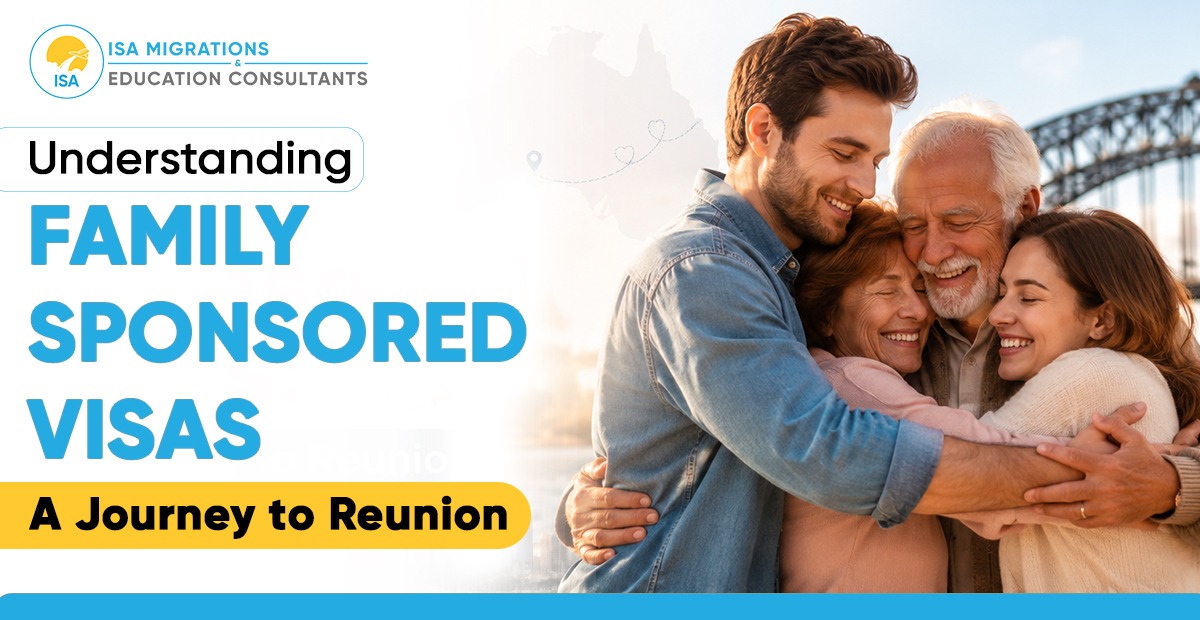
Reuniting with loved ones through a family sponsored visa is an exciting step towards building a life together in Australia. Whether you’re planning a short visit or maybe thinking of skilled migration through the support of an eligible relative, knowing how these visas operate will simplify the procedure for you. Because every visa route comes with its own set of sponsorship guidelines and ways of applying, it is best to understand your options right from the beginning.
In this guide, we’ll walk you through the different types of family-sponsored visas, who can sponsor you, and the key steps to help you apply with confidence.
A family sponsored visa is one of the visa options whereby a qualifying family member residing in Australia can sponsor your visa application. It allows you to visit, work or live in Australia. Your sponsor could be an Australian citizen, a permanent resident of Australia, or a New Zealand citizen who is eligible and meets the relevant requirements for sponsorship.
Australia has a number of family-sponsored visa categories which cater to different migration needs. Here’s a quick overview of the most familiar family sponsored visa types:
There are times when you can’t celebrate a birthday, attend a wedding or just have a meal with your family because your loved ones are living overseas, and it can be very tough. For families who simply want to spend time together, this tourist visa stream is a common way to sponsor tourist visa Australia offers. So relatives can stay throughout the event.
Maintaining long-distance relationships is a challenge for anyone, and the Partner Visa is there to help couples establish a life together in Australia. You might be awarded a temporary Partner Visa (Subclass 820 or 309) based on the place of your application before getting the permanent Partner Visa (Subclass 801 or 100) that you are eligible for.
Must Read: Partner Visa 820 vs 801: What’s the Difference and Why It Matters?
The family sponsored regional visa 491 is one of the most popular skilled pathways for people who have relatives settled in regional Australia. Being a five-year provisional visa, it enables qualified skilled workers who are sponsored by their family members living in regional Australia to live, work, and study in designated regional areas. By fulfilling the visa requirements, you may become eligible for permanent residency in the future as well.
Once all your dear family members have immigrated and settled in Australia, it can be tough and alienating to remain behind. The Remaining Relative Visa (Subclass 115 or 835) is a permanent visa giving eligible applicants the opportunity to live with their closest relatives who are only near relatives in Australia.
Being a long distance from your children means you may not be present for the moments that really matter. If you qualify, a Parent Visa will allow you to reunite with your children in Australia, either on a temporary or permanent basis, depending on which visa subclass you choose.
Read More: Australia Partner Visa Processing Time 2026
Getting a family-sponsored visa isn’t simply about having relatives in Australia. In fact, you and your sponsor will have to satisfy certain requirements that are determined by the Australian Government. The guidelines differ with each visa subclass, but there are several standard eligibility conditions that nearly all applicants should take into account before their application.
Your sponsor is an important part of your visa application, so they are required to fulfil some conditions. Typically, the sponsor must:
Another thing you need to know is how much is security bond for sponsored family stream visits is required. Some visas may charge between A$5,000 and A$15,000 from the sponsor, and this amount is refunded when the visa conditions are met.
Read More: Partner Visa Subclass 820/801 Explained: Requirements, Processing, and Benefits
Ensuring the sponsor meets requirements is just one aspect of the whole procedure. Besides that, as the applicant, you must also prove that you meet the eligibility criteria for the visa. Depending on the visa you’re applying for, you may need to:
You can also get help from immigration consultants to collect all the required documents.
Explore: Common Reasons For Partner Visa Refusal In Australia
If you are wondering how to sponsor relatives to Australia, the process becomes much clearer once you break it down into a few simple steps. Here’s the typical process of family visa applications:
A family-sponsored visa may be the beginning of a new chapter if you are planning to visit loved ones or want to start a life together in Australia. Every visa has its own criteria for eligibility, sponsorship, and documentation, so understanding the whole process can help you avoid unnecessary delays. If your situation is more complex or you’d like professional guidance, a MARA registered migration agent Adelaide can help you navigate the process.
Not always. Some family-sponsored visas can be applied for while you’re in Australia, while others require you to be offshore when you lodge your application or when a decision is made.
It depends on the visa subclass. Some family sponsorship Australia visas allow eligible family members to be included in the same application, while others require each applicant to lodge a separate visa application.
Most family-sponsored visas don’t have a general age limit. However, certain visa categories or dependent family member provisions may include age-related eligibility requirements.
Study rights depend on your visa conditions. Some family-sponsored visas allow you to study, while others may place limits on the length or type of course you can undertake.
Submitting complete documents, responding quickly to requests for additional information, and ensuring all details are accurate can help your application progress as smoothly as possible.