

The Australian citizenship test has 20 multiple-choice...
Read More-
Amit Taya (Perth): +61 426 488 909 | Harmandeep Kaur (Adelaide): +61 8 8120 4199
Amit Taya (Perth): +61 426 488 909 | Harmandeep Kaur (Adelaide): +61 8 8120 4199
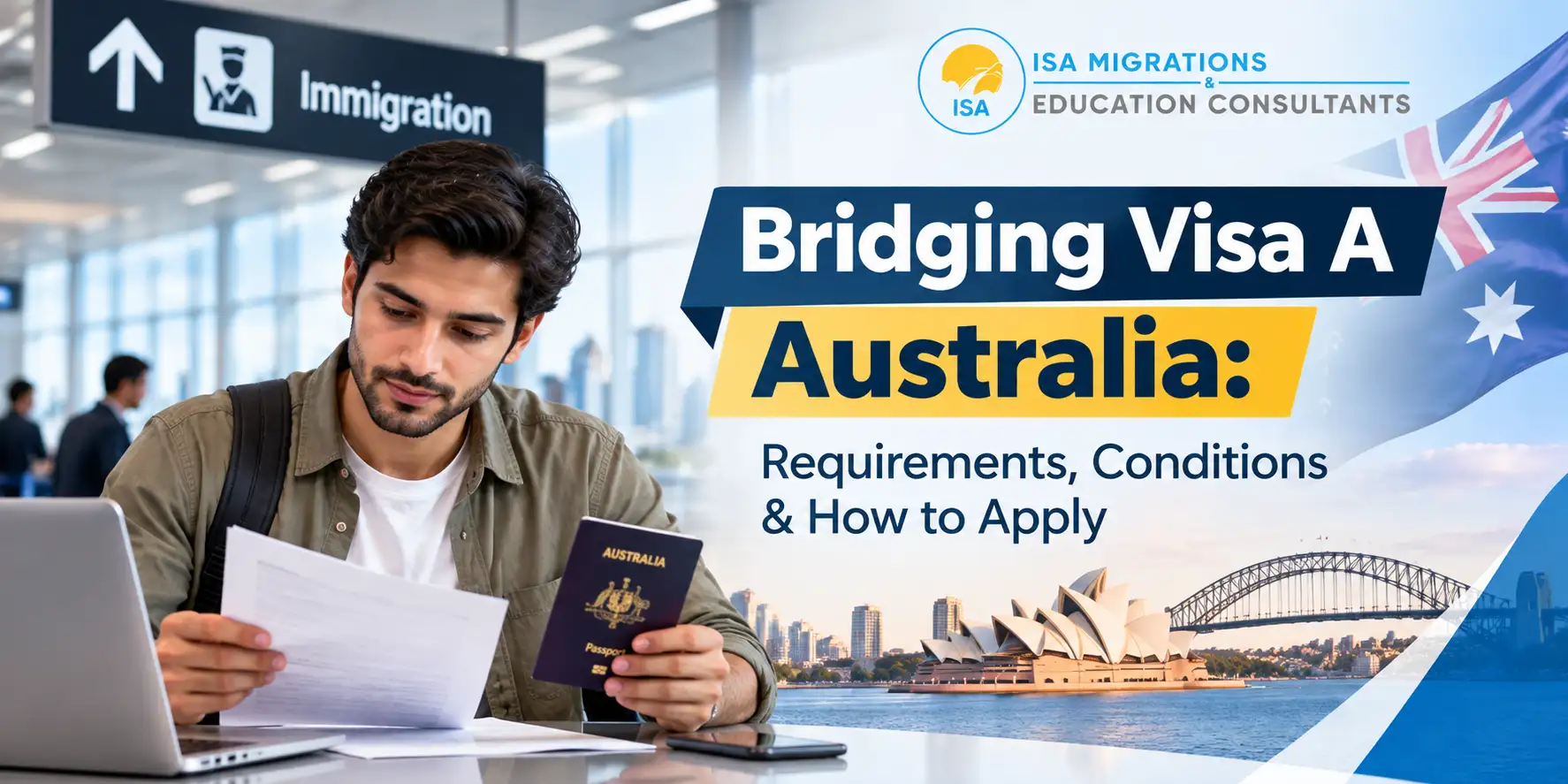
A Bridging Visa A (BVA) can become important when your visa expiry date arrives. It provides you with lawful status to stay in Australia while your substantive visa is being processed. But this visa may have conditions regarding studying in an Australian institution and working for an Australian employer. So, understanding the key requirements and conditions of this visa is crucial while you wait for your new visa.
To help you with that, this guide walks through who is eligible, what documents you may need, and the conditions attached to the BVA. It also explains how long it takes to process, what it costs and how to apply if you ever need to lodge one yourself.
The Bridging Visa A subclass 010 is a temporary Australian visa that allows you to stay lawfully in the country while you wait for a decision on your new visa application lodged while you are in Australia. This visa bridges the gap between the expiration of your current visa and the approval of your new one.
Like several other Australian bridging visas, it does not overlap with your existing visa. As the name suggests, this visa acts as a bridge that provides you with lawful status to live, work or study in Australia depending on your substantive visa conditions.
Onshore applicants are normally eligible for the Bridging Visa Subclass 010 without having to undergo any eligibility testing if they lodge a substantive visa application before their existing visa expires. However, there are several things that must be taken into account in order to prove your eligibility.
The following list shows the core requirements for most applicants:
As mentioned above, this bridging visa is designed particularly for onshore applicants. This means that if you want to get the Bridging Visa 010, you should stay in Australia during the visa transition period. If you depart Australia without first obtaining separate travel permission, your bridge ceases immediately. In case you are planning to leave Australia temporarily while your substantive visa is in the processing stage, you will need a Bridging Visa B Subclass 020.
Also Read: 5 Important Facts To Know About Bridging Visa Australia
The visa subclass 010 is issued along with your new application, so you may not require submitting another set of documents. However, some identification documents may be required, especially when you apply separately for the right to work.
Below is a quick list of documents that visa subclass 010 applicants are required to prepare:
In case your first grant does not allow you to work, then you will require collecting financial evidence in order to get BVA work rights. You will be required to provide evidence like bank statements, living expenses, and financial hardship, as proof of inability to meet basic necessities without employment.
Conditions generally mirror those of your previous visa. They mostly relate to your rights around work, study and travel, so it pays to know exactly what applies to your situation.
The table below breaks down the most common Bridging Visa A conditions, so you know exactly where you stand:
| Condition Code | What Do The Bridging Visa Conditions Mean? |
|---|---|
| 8101 | No work allowed in Australia |
| 8102 | Work allowed only in a field related to your study course |
| 8103 | No paid work unless written permission has been granted |
| 8501 | You must maintain adequate health insurance |
| No travel | Leaving Australia generally cancels this bridging status automatically |
The BVA is often granted within a day to a few weeks. The Bridging Visa A processing time is not definite and is not mentioned in the Department of Home Affairs visa processing time guide. The processing time for this visa differs based on the application completeness and workload of immigration authorities.
There is no separate government bridging visa cost for this Bridging Visa A. Since it is directly connected to your substantive visa application, you do not need to pay an extra fee simply to have the bridging visa status.
Other expenses that may come into play, such as health examinations and police clearances, are part of your main visa application process instead of the bridging visa process. Prior to your visa expiry date, it is wise to check your eligibility or seek advice from a MARA-registered immigration consultant to avoid any gaps in your lawful status.
To apply for a Bridging Visa A, you’ll need to use ImmiAccount, the Australian government’s designated online system through which visa applications are lodged and status updates can be tracked. Here is how to apply for this visa:
Applying for a substantive visa usually results in a BVA being granted without any extra action needed. If your bridging visa is not applied for automatically, consult a migration consultant for further steps.
Also Read: Bridging Visas Australia: Different Visa Categories & How to Apply
A bridging visa A is a simple but important safeguard for anyone waiting on a visa decision in Australia. Most applicants receive it automatically and at no extra cost, which takes a lot of the guesswork out of the process. Since rules and conditions can change, it is always worth confirming the latest details before you apply.
If you are unsure about your visa options or need professional guidance, speaking with the best migration agent in Adelaide can help you make the most appropriate choice.
Yes, but it is tied to your substantive application outcome, not a fixed calendar date. It generally remains in effect while your substantive visa application is being processed, subject to the conditions attached to your visa.
Eligibility depends on your visa subclass and any reciprocal health care agreements with your home country.
It may count in some streams, but rules vary by visa subclass and pathway.
Australia has several types of bridging visas, including Bridging Visas A, B, C, D, E and F, each serving different circumstances. The appropriate bridging visa depends on your immigration status and the circumstances of your visa application.
A Bridging Visa A generally has no separate visa application charge, but you should check current Department fees before applying.